
When you start dreaming of warm, bubbling water and soothing hydrotherapy in your backyard, you immediately run into a confusing wall of terminology. Is it a hot tub? Is it a spa? Are they the same thing?
Understanding the hot tub versus spa debate is the first step in making an informed purchase. While the terms are often used interchangeably in casual conversation, there are distinct historical and structural differences that can affect installation, cost, and your overall experience.
At The Hot Tub Store, we’ve spent 25 years helping families in Hermantown, MN, and surrounding areas navigate these choices to find the perfect wellness solution for their homes.
Here is a complete guide to help you navigate the definitions and choose the perfect water vessel for your lifestyle.
In modern language, the line between “hot tub” and “spa” is incredibly blurry. If you walk into a dealership and ask for a spa, they will likely show you the same product as if you asked for a hot tub. However, understanding the nuance helps when discussing specific features or installation types.
The confusion stems from regional differences and the evolution of the industry. Originally, “hot tubs” referred specifically to wooden tubs (often made of redwood or cedar). “Spas” were generally associated with health resorts or in-ground concrete structures. Today, portable acrylic units have bridged the gap, leading many people to use spa and hot tub interchangeably—and that’s perfectly fine for everyday conversation.

Technically speaking, a hot tub is a large tub full of hot water used for hydrotherapy, relaxation, or pleasure.
Modern hot tubs are typically standalone, portable units that sit above the ground. They are entirely self-contained, meaning all the plumbing, electrical control systems, and heaters are built inside the cabinet.
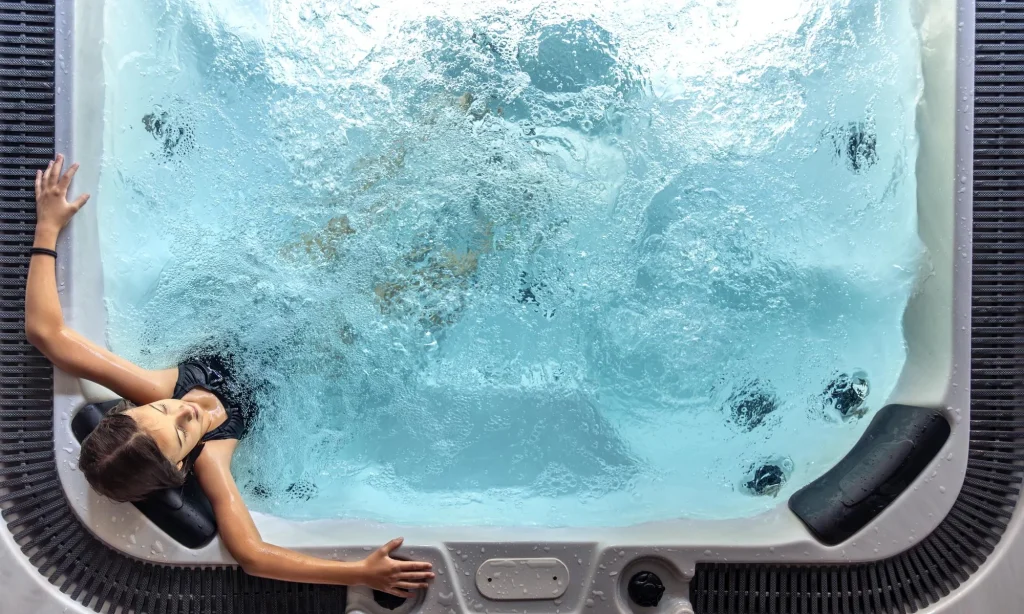
The word “spa” is an acronym for the Latin phrase salus per aquam, which means “health through water”—a fitting definition for vessels designed to promote wellness and relaxation.
In the context of residential equipment, a spa often refers to the same acrylic machine as a hot tub. However, the term is also widely used to describe:
While the terms overlap, the differences become clear when you look at design and function.

This is one of the most common questions we hear at our Hermantown location. The answer is simple: Jacuzzi® is a brand name, not a product type.
Just as people say “Kleenex” when they mean facial tissue, many people say “Jacuzzi” when they mean hot tub. The Jacuzzi brothers invented the first underwater jet pump in the 1950s, revolutionizing the industry. While all Jacuzzis are hot tubs, not all hot tubs are Jacuzzis. At The Hot Tub Store, we proudly carry Sundance® Spas, which offers over 30 years of experience in spa design and production with models backed by comprehensive warranties.
| Hot Tub | Portable, above-ground vessel with integrated plumbing | High-performance hydrotherapy & energy efficiency |
| Spa | Broad term; often implies in-ground or wellness-focused use | Aesthetic integration with a pool or landscape |
| Jacuzzi | A specific premium brand of hot tub | Buyers looking for brand heritage and specific patented jet technology |
If you are renovating your backyard, you might be deciding between a custom in-ground spa and a portable hot tub.

A swim spa bridges the gap between a pool and a hot tub. It is a larger vessel (typically 12 to 19 feet long) that features a powerful current at one end for swimming in place and hydrotherapy seats at the other.
A swim spa costs significantly more than a hot tub but usually less than a traditional in-ground pool. It requires a larger reinforced concrete pad but offers year-round versatility that a standard pool cannot match. The Hot Tub Store can provide site consultations to help you determine the best option for your space and provide professional delivery and installation services for whichever solution you choose.
If your main goal is muscle recovery, stress relief, or managing chronic pain, a portable hot tub is the superior choice.
Because portable units are manufactured in a factory, engineers can place jets in precise locations to target the neck, shoulders, back, and calves. The pumps are dedicated solely to the jets, ensuring strong, consistent pressure perfect for addressing arthritis pain, back pain, and muscle tension. The Sundance® 880™ Series, for example, is designed to deliver the best in-home hydrotherapy with feature-rich luxury spas built with smart technology.
In contrast, in-ground spas often rely on the pool pump, which may not provide the intense therapeutic pressure required for deep tissue massage and optimal wellness benefits.

Do not confuse a hot tub with a jetted tub (often called a whirlpool bath) found in a master bathroom.
Many luxury backyards feature a “pool and spa combo.” This usually means an in-ground spa is attached to the pool, sharing the same filtration and heating equipment.
While visually stunning, these systems can be complex. To heat the spa, you have to isolate the water flow from the pool and run the heater for 30–60 minutes. A portable hot tub, by contrast, is always hot and ready to use the moment you step outside—perfect for spontaneous relaxation or responding to sudden muscle soreness after a long day.
The battle of hot tub versus spa ultimately comes down to your priorities.
Regardless of what you call it, investing in warm water therapy is an investment in your health. The therapeutic benefits include pain relief, muscle relaxation and recovery, stress reduction, improved sleep, enhanced circulation, and support for cardiovascular health. Understanding these differences ensures you bring home the right retreat for your relaxation needs.
Ready to discover the perfect spa or hot tub for your lifestyle?