A hot tub should melt away stress, not stress your wallet. Yet the difference between an energy-efficient spa and a poorly built one can add hundreds of dollars to your yearly energy bill. The good news? A well-designed hot tub is built to hold heat, use energy efficiently, and deliver years of relaxation at a comfortable monthly cost. This guide breaks down what makes a spa truly energy-efficient in 2026, how much you can expect to spend running one, and how to choose a model that can deliver long-term value season after season.
Here’s what you’ll learn:
At The Hot Tub Store in Hermantown, MN, we’ve spent 25 years helping Northland homeowners enjoy warm, worry-free soaks through even the coldest winters. Let’s help you do the same.
Energy efficiency comes down to one simple goal: keeping heat in and letting the equipment work smarter, not harder. A spa that effectively retains warmth requires less energy to maintain its temperature. Four key features do most of the heavy lifting.
Insulation is one of the biggest factors in hot tub energy efficiency. Full-foam insulation fills the entire cabinet with dense foam that surrounds the shell and plumbing, helping seal in heat and providing added protection against Minnesota’s freezing temperatures.
Partial insulation, by contrast, only lines portions of the cabinet walls, leaving air spaces where heat can escape. That can cause the heater to run more frequently and increase energy consumption. In plain terms: full foam can cost a little more upfront while helping deliver consistent energy savings month after month.
Much of a hot tub’s heat loss occurs at the water’s surface, making a snug, well-insulated cover one of your best defenses against unnecessary energy loss. Look for a thick, tapered cover with a dense foam core and a tight seal around the spa’s edge.
A worn, waterlogged, or poorly fitting cover forces your heater to work harder to maintain the desired water temperature. Here’s the takeaway: replace a sagging or damaged cover promptly, because a properly fitted cover helps retain heat and control ongoing energy costs.
Smart pump design matters more than raw power. Dual-pump systems allow a spa to use a smaller, efficient circulation pump for everyday filtration and heating, while a larger pump operates when you want stronger jet performance.
This means the spa doesn’t need to rely on a high-powered pump around the clock. You get powerful hydrotherapy when you want it and quieter, lower-energy operation during everyday heating and filtration.
A quality heater reaches your target temperature efficiently and helps maintain it consistently. When paired with effective insulation and a properly sealed cover, an efficient heater can cycle less often, which is where meaningful energy savings can come from.
Modern spas can also use heat generated by the circulation pump to help warm the water, making better use of the energy already being produced during everyday operation.
Key takeaway: Full foam, a tight cover, dual pumps, and an efficient heater work together to support lower energy consumption. No single feature does it alone.
Today’s best spas combine several technologies to reduce energy use without sacrificing comfort or hydrotherapy performance. Understanding these features helps you compare hot tubs with greater confidence.
Together, these features form an integrated efficiency system. The more of them a spa includes, the greater the potential to reduce long-term energy use and running costs.

For a well-insulated modern spa, expect roughly $20 to $50 per month in electricity, depending on your usage habits, climate, and local energy rates. Older or poorly insulated hot tubs can easily cost considerably more to operate.
In colder regions like Northland, energy efficiency matters even more because your spa works harder to maintain its temperature through long, cold winters. A quality, full-foam model can help keep energy use and operating costs toward the lower end of the range.
Four everyday factors shape your energy bill more than anything else. Adjusting these factors can give you more control over your monthly operating costs.
Every time you open the cover and run the jets, the spa uses additional energy as it reheats and recirculates the water. Frequent, extended soaks generally require more energy than occasional, shorter sessions, although a well-insulated spa can help reduce the difference.
Many utilities offer lower electricity rates during off-peak hours, often overnight. Scheduling filtration and other appropriate heating cycles during those periods can help reduce energy costs over the course of a year.
More water means more water to heat and maintain. A larger spa naturally requires more energy to operate, so choose a size that fits the number of people who will actually use it rather than purchasing more capacity than you need.
Every degree can add to energy use. Running your spa at 104°F generally requires more energy than maintaining it at a comfortable 100°F. Lowering the temperature a few degrees when you’re away can reduce energy use without requiring a major change to your routine.
Key takeaway: You control many of your running costs through temperature, timing, usage habits, and choosing the right-sized spa.
You don’t need complicated software to estimate your hot tub operating costs. A simple calculation can give you a realistic ballpark before you buy and help you compare the potential ongoing cost of different models.
Use this quick formula:
For example, a spa using 200 kWh at $0.16 per kWh costs about $32 per month. Run the numbers using your own electricity rate to see where your estimated operating costs may land. Our team can also share real-world figures for the specific models you’re considering.
An energy-efficient spa rewards you in more ways than one. Lower operating costs are just the start.
In plain terms: energy efficiency isn’t about giving anything up. It’s about getting more enjoyment, comfort, and value from your hot tub while using energy more efficiently.
When you compare hot tub models, keep your eye on the features that can make a meaningful difference in long-term energy use and operating costs:
The more of these features a spa checks off, the greater its potential for lower long-term energy consumption and operating costs.
Choosing wisely means looking beyond the sticker price and considering the total cost of ownership. Two questions can quickly help you evaluate a spa beyond its marketing materials.
Look for spas that meet recognized energy-efficiency standards, such as the California Energy Commission (CEC) requirements, which many quality manufacturers meet or exceed. A spa built to these benchmarks is engineered with standby energy loss in mind.
Ask the dealer directly whether a specific model meets these standards. A confident, specific answer can help you make a more informed purchasing decision; a vague answer may be a reason to ask additional questions about the spa’s construction and efficiency.
This is the question that matters most. Ask whether the spa uses full-foam insulation or only partial cabinet insulation. Full foam can cost a bit more upfront but may provide long-term value through improved heat retention, lower energy use, and steadier water temperatures, especially through Minnesota winters.
Key takeaway: Prioritize insulation and verified efficiency standards. They can tell you more about potential running costs than the sticker price alone.
Even the most efficient spa benefits from smart operating habits. These simple steps can help keep energy use under control year after year.
A well-maintained spa is an efficient spa. Clean or replace your filters on schedule so the circulation system doesn’t have to work harder against clogged cartridges. Test and balance your water regularly to help protect the heater, plumbing, pumps, and other components.
Inspect your cover seams and seal each season, and check for leaks, worn gaskets, or other signs of equipment wear. Small, consistent maintenance steps can prevent gradual efficiency losses that quietly increase your energy bill and help keep your hot tub ready for use.
A few habits can quietly drive up hot tub energy costs. Steer clear of these common missteps:
Avoid these mistakes, and your spa can remain more affordable to operate while staying warm and ready whenever you are.
1. How much does an energy-efficient hot tub cost to run per month?
Most well-insulated modern spas cost about $20 to $50 per month in electricity, depending on your climate, usage habits, temperature settings, and local energy rates.
2. Is full-foam insulation really worth it?
Yes, especially in cold climates. Full foam helps retain heat around the shell and plumbing more effectively than partial insulation, helping reduce energy use and keep your water ready through Minnesota winters.
3. Does lowering the temperature save much energy?
It does. Even dropping the temperature a few degrees when you’re away can reduce how hard the heater needs to work, and those savings can add up over the course of a year.
4. Should I leave my hot tub on all the time?
For most owners, yes. A well-insulated spa can use less energy maintaining a steady temperature than fully reheating from a cold state, while also keeping the spa ready to enjoy.
5. Do energy-efficient hot tubs cost more upfront?
Often a little, but they can provide long-term value through lower operating costs, reduced equipment strain, fewer repairs, and potentially longer component life.
6. How can I tell if a spa is genuinely efficient?
Ask about insulation type, cover quality, pump design, heater efficiency, and whether the model meets recognized efficiency standards. Specific answers can help you identify a well-built, energy-conscious spa.
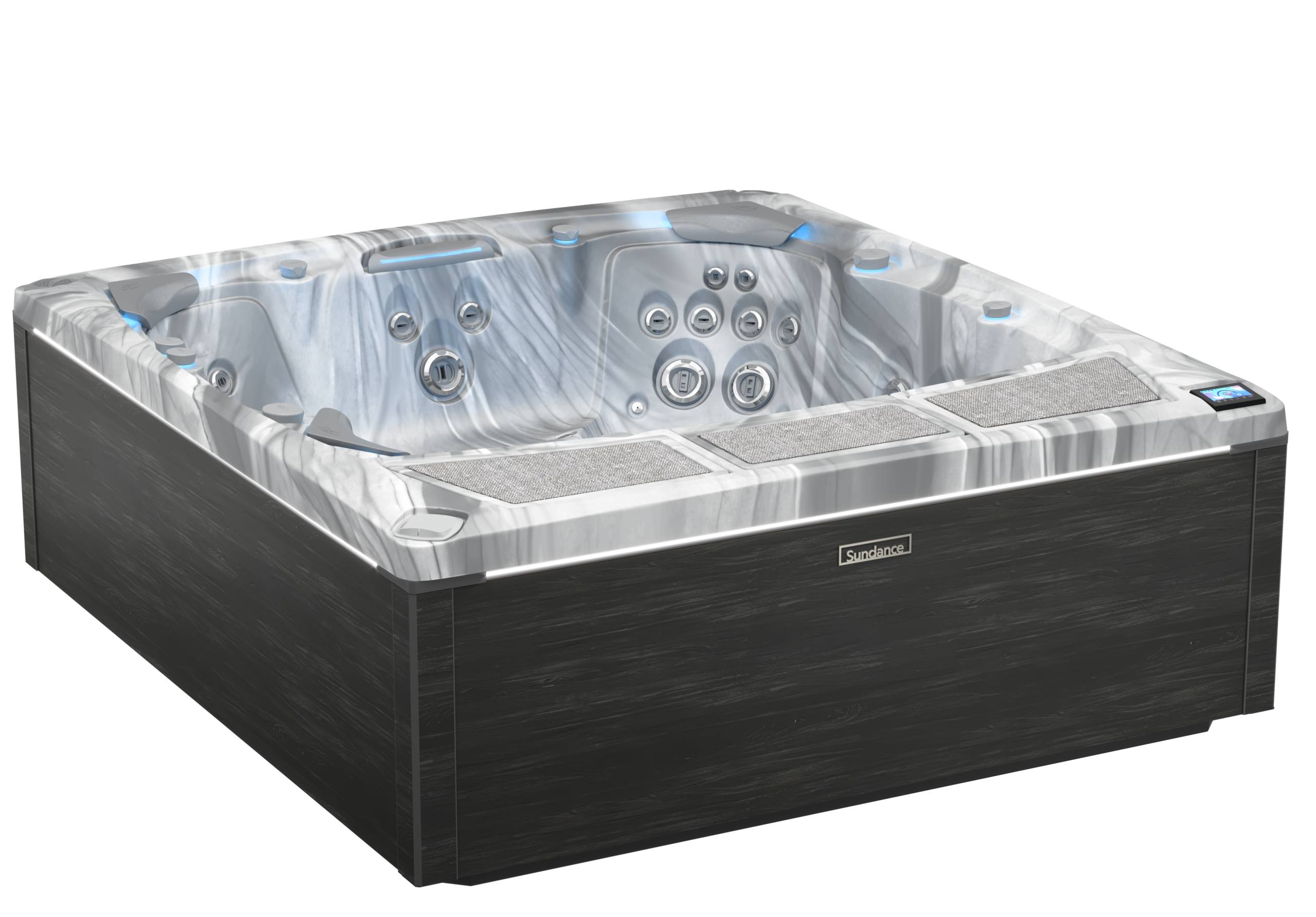
For over 30 years, Sundance® Spas has engineered spas that balance powerful hydrotherapy with impressive efficiency. Every model reflects thoughtful design intended to retain heat, use energy efficiently, and provide lasting performance, exactly what you want in a demanding northern climate.
Sundance® spas use full-foam insulation that surrounds the shell and plumbing, helping seal in warmth from every angle. This dense foam helps reduce heat loss, supports the plumbing in freezing temperatures, and can help the heater cycle less often. The result is steady, comfortable water and operating costs that can stay comfortably low, even through the coldest Hermantown winters.
Every Sundance® line we carry is designed with efficiency in mind. Here’s how the collections compare, so you can match the right spa to your space, preferences, and budget.
The 880™ Series represents Sundance® at its finest. It pairs advanced hydrotherapy and premium comfort with top-tier insulation and efficient pump design, delivering an elevated spa experience while helping keep ongoing running costs under control.
The 780™ Series blends everyday versatility with genuine value. Strong insulation, efficient operation, and flexible seating make it easy to shift from a lively family gathering to a serene evening soak, all while supporting efficient energy use.
The 680™ Series offers more shapes, sizes, and custom options than almost any other line, with the same commitment to thoughtful efficiency. It’s an approachable, dependable choice that combines practical design with energy-conscious operation and accessible value.
The Sundance Splash® line brings full-body lounge comfort within reach. With spacious, ergonomic seating and efficient, easy-care operation, it’s a welcoming introduction to premium spa ownership designed to deliver comfort without unnecessarily increasing your ongoing energy costs.
An efficient spa stays efficient with the right support behind it. Our team helps keep your hot tub operating at its best long after delivery day, from routine maintenance to seasonal service and repairs.
Regular maintenance protects both your comfort and your spa’s efficiency. Our maintenance guidance and services help keep filters clean, water balanced, and equipment operating smoothly, so your spa doesn’t have to work harder than necessary.
Minnesota winters demand real preparation. Our seasonal winterization and spring restart services help protect your spa from freeze damage and keep it operating efficiently through every season.
When something needs attention, our experienced technicians provide expert repair services for all makes and models. Prompt, quality repairs can restore efficient operation, protect other components, and extend the life of your spa, helping save you money over time.
Bringing home an energy-efficient spa should feel effortless. We offer flexible financing, including in-house and third-party options, with affordable monthly payments and a simple, hassle-free application process that welcomes a range of credit situations. An efficient spa that helps control long-term running costs becomes even easier to enjoy when the purchase fits comfortably within your budget.
Our expert team handles safe, professional hot tub delivery and installation from start to finish. We manage placement, filling, and electrical coordination, then walk you through operation, water care, and efficient temperature settings so you feel confident from day one. Proper installation also helps protect your spa’s performance and efficiency, ensuring it operates the way it was engineered to.
An energy-efficient hot tub delivers the best of both worlds: soothing, ready-when-you-are warmth and running costs that stay comfortably low. Focus on full-foam insulation, a quality cover, smart pump design, efficient equipment, and verified efficiency, then support your investment with consistent maintenance. Do that, and your spa can reward you with years of comfortable, affordable relaxation.
Ready to see the difference for yourself? Visit us at 4881 Miller Trunk Hwy, Hermantown, MN 55811 to compare energy-efficient Sundance® Spas, explore flexible financing, and get real running-cost estimates for the models you love. For 25 years, we’ve helped Northland homeowners find spas built for comfort, performance, and efficient operation. Stop in today and discover the relaxation waiting in your own backyard.