Pine County winters do not ease into the season gradually. They arrive with authority and they stay. For Hinckley hot tub owners near Mission Creek, the span between October and April represents a relentless cycle of thermal stress, moisture exposure, and mechanical loading from snow accumulation that pushes spa cover materials beyond what most manufacturers assume during their product design and testing processes.
The degradation sequence begins at the vinyl surface level, often weeks before temperatures drop below freezing for the first sustained period. Late autumn UV exposure in the Hinckley area, even at lower solar angles, continues to break down the polymer structure of unprotected vinyl slowly and consistently. Those microscopic surface cracks do not look like damage under casual visual inspection, but they function as entry points for moisture that would otherwise bead and run off a properly waterproofed surface.
Once moisture penetrates through compromised surface vinyl, the freeze-thaw cycling that characterizes a Hinckley winter begins expanding those entry points progressively. Water trapped in surface cracks freezes, expands, and forces the crack slightly wider with each cycle. By the time sustained spring temperatures arrive near Mission Creek, the damage pathway from the vinyl surface to the foam core below is measurably wider than it was in October, and the foam itself has begun absorbing moisture that it will never fully release.
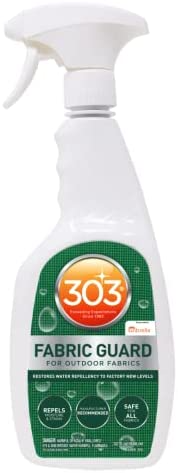
A waterlogged foam core is the end state that every Hinckley spa owner should work to avoid. Once foam absorbs significant moisture, the cover loses the insulating efficiency it was designed to provide, driving heating costs upward throughout the winter months when maintaining spa water temperature in subzero conditions already demands meaningful energy input. The cover also becomes substantially heavier, placing mechanical stress on cover lifter hardware and hinge points that were not designed for that sustained additional load. And the increased weight and reduced insulation compound each other, creating a deteriorating performance spiral that a single tube of vinyl conditioner and a pint of 303 Fabric Guard applied in September would have prevented entirely.
303 Fabric Guard is a professional-grade fabric and vinyl protectant that has earned a specific reputation in the marine, automotive, and spa industries for delivering genuine, durable water repellency on porous and semi-porous vinyl surfaces. That reputation is built on a technical distinction that matters for Hinckley spa cover protection specifically.
Generic silicone-based spray protectants work by depositing a surface coating on top of the vinyl material. That coating provides temporary water repellency but sits on the surface rather than bonding into the material structure, meaning it wears off relatively quickly under UV exposure, physical handling, and the thermal cycling that a Hinckley spa cover experiences throughout autumn and winter. After a few weeks of serious weather exposure, a surface-only coating has degraded to the point where meaningful waterproofing protection is largely gone.
303 Fabric Guard works fundamentally differently by penetrating the vinyl fiber structure at a molecular level and bonding to the individual fibers from within the material rather than simply coating the surface. That internal bonding creates a breathable, durable water-repelling barrier that sheds liquid water consistently while allowing moisture vapor to pass through the material, preventing the trapped moisture condensation that accelerates foam core degradation in poorly ventilated spa cover designs.
The breathability distinction is particularly important for Hinckley spa owners facing prolonged winter conditions. A non-breathable surface coating traps moisture between the vinyl shell and foam core during the temperature differentials that Hinckley winters produce daily, accelerating the waterlogging process that compromises cover performance. The breathable barrier that 303 Fabric Guard creates allows those moisture vapors to escape rather than condense into liquid water that the foam absorbs over time.
Step 1: Time your application before the first hard freeze arrives. The optimal window for pre-winter 303 Fabric Guard application in the Hinckley area is September through mid-October, before sustained temperatures drop below 40 degrees Fahrenheit. Product application in very cold conditions reduces penetration depth into the vinyl fiber structure and limits bonding effectiveness. Apply while daytime temperatures are still reliably above 50 degrees for best results.
Step 2: Clean the cover surface thoroughly before application. 303 Fabric Guard bonds most effectively to a clean vinyl surface free of dirt, chemical residue, oxidation buildup, and any previously applied surface protectants that have degraded into a barrier layer preventing deep penetration. Use a quality vinyl cleaner or a mild soap and water solution applied with a soft cloth, working in sections across the entire cover surface. Pay particular attention to seam lines and edges where contaminant buildup tends to concentrate.
Step 3: Address oxidation and UV fading before applying Fabric Guard. Hinckley spa covers that have been exposed to summer UV without adequate protection often show surface oxidation, color fading, or a chalky surface texture by the time autumn preparation begins. A dedicated vinyl conditioner applied before 303 Fabric Guard opens the degraded surface layer, restores pliability, and creates a better-prepared substrate for the Fabric Guard to penetrate and bond to. The Hot Tub Store carries compatible vinyl conditioning products to pair with your 303 Fabric Guard application.
Step 4: Allow the cover to dry completely before applying 303 Fabric Guard. Any moisture remaining on the vinyl surface after cleaning will dilute the Fabric Guard product and prevent proper fiber-level penetration and bonding. In Hinckley’s autumn humidity conditions, allow at least two to three hours of open-air drying time in a location with good air circulation before proceeding with application. A dry cover surface is the single most important preparation step for a successful treatment outcome.
Step 5: Shake the 303 Fabric Guard pint bottle thoroughly before use. The active polymer compounds in 303 Fabric Guard can settle between uses. A thorough thirty-second shake before measuring and applying ensures consistent product concentration across the full treatment surface and reliable waterproofing performance from the first section treated to the last.
Step 6: Apply 303 Fabric Guard in smooth, overlapping passes across the entire cover surface. Hold the spray nozzle approximately six to eight inches from the vinyl surface and apply in methodical, overlapping passes that ensure complete coverage without leaving gaps or dry patches. Work in sections of approximately two square feet at a time, applying the spray and then working the product into the vinyl texture with a clean microfiber cloth before moving to the next section.
Step 7: Pay special attention to seams, edges, and previously damaged areas. Seam lines where two vinyl panels are joined represent the highest-risk zones for moisture penetration on most spa covers, as the seam stitching creates a pathway through the surface material that standard vinyl is not inherently waterproof across. Apply an additional pass of 303 Fabric Guard along all seam lines and fold edges, working the product thoroughly into those zones with your microfiber cloth to ensure complete coverage at the highest-risk penetration points.
Step 8: Apply a second coat for maximum winter protection. For Hinckley spa covers facing their first winter after a 303 Fabric Guard treatment, or for covers with visible UV damage or surface degradation, a second coat applied after the first has fully dried significantly improves waterproofing durability and extends the effective protection period through a longer portion of the winter season before re-application becomes necessary.
Step 9: Allow full drying before exposing to water or returning to the spa. 303 Fabric Guard requires a complete dry time of at least thirty minutes in warm conditions before the treated surface is ready to repel water effectively. In Hinckley’s cooler autumn temperatures, allow sixty minutes of drying time before testing the water repellency of the treated surface or returning the cover to your spa.
A single pre-winter application of 303 Fabric Guard provides meaningful protection through the Hinckley winter season, but a biannual treatment schedule delivers the most complete year-round waterproofing coverage for spa covers operating through Minnesota’s full seasonal range.
The pre-winter application in September or early October protects against the freeze-thaw cycling, snow load moisture, and sustained cold exposure of the Hinckley winter. A spring application in late April or May, after the cover has dried thoroughly following snowmelt season, restores waterproofing coverage for the UV-intense summer months when solar radiation degrades unprotected vinyl polymer structure most aggressively.
That biannual rhythm, combined with a monthly visual inspection of seam integrity and surface condition, creates a proactive cover maintenance approach that extends useful cover life significantly beyond the three to four year average that unprotected spa covers in Pine County typically achieve before waterlogging, cracking, or excessive weight necessitates replacement.
303 Fabric Guard is an outstanding preventive and maintenance treatment, but it is important for Hinckley spa owners to recognize the boundary between a cover that benefits from treatment and one that has deteriorated beyond what any surface treatment can meaningfully address.
If your spa cover is noticeably heavier than it was when new, a waterlogged foam core has already compromised its insulating and structural performance beyond recovery through surface treatment alone. If the vinyl surface shows deep cracking, significant splitting at seams, or tears that have exposed the foam core to direct moisture contact, replacement is the appropriate next step regardless of how thoroughly 303 Fabric Guard is applied to the remaining intact surface area.
The Hot Tub Store carries replacement spa covers and can help Hinckley area owners near Mission Creek assess whether their current cover is a treatment candidate heading into winter or a replacement candidate that would cost more in heating efficiency losses and equipment strain over a full Hinckley winter than a new cover would cost to replace before the freeze arrives.
Hinckley residents and 55037 area spa owners can purchase 303 Fabric Guard in the pint size at The Hot Tub Store, located at 4881 Miller Trunk Highway in Hermantown, MN. The drive up Interstate 35 from Pine County connects Hinckley spa owners with the most experienced spa product resource in the Northland region, a team with over 25 years of industry expertise and a genuine understanding of what Minnesota winters actually demand from spa equipment and maintenance products.
Call 218-740-3105 or email sundancetwinports@gmail.com to confirm product availability or ask any cover maintenance question before making the trip from the Mission Creek area. Time your pre-winter application right and your cover will handle whatever Hinckley throws at it from November through March.
Where can I buy 303 Fabric Guard near Hinckley, MN?
Why do Hinckley hot tub covers near Mission Creek need waterproofing treatment before winter?
How is 303 Fabric Guard different from a generic spray protectant for my Hinckley spa cover?
When is the best time to apply 303 Fabric Guard to my Hinckley spa cover?
Do I need to clean my spa cover before applying 303 Fabric Guard near Mission Creek?
How many coats of 303 Fabric Guard should I apply to my Hinckley spa cover before winter?
How long does 303 Fabric Guard take to dry on a spa cover in Hinckley autumn temperatures?
How often should Hinckley spa owners apply 303 Fabric Guard to their hot tub covers?
Can 303 Fabric Guard fix a spa cover that is already waterlogged near Hinckley?
Does The Hot Tub Store offer complete spa cover assessment and replacement services for Hinckley area owners near Mission Creek?